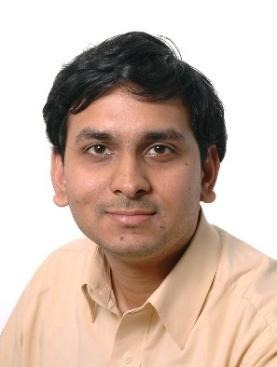
Dr. Ashwin A Seshia
Technical Committee Chair IIT Bombay |
Dr. Ashwin A. Seshia is an Institute Chair Professor in the Department of Electrical Engineering at IIT Bombay and a Professor of Microsystems Technology at the University of Cambridge. He received his B.Tech. degree in Engineering Physics from IIT Bombay in 1996, and the MS and PhD degrees in Electrical Engineering and Computer Science from the University of California, Berkeley in 1999 and 2002 respectively. He has held visiting positions at Stanford University, the University of California, Berkeley, IIT Bombay, and UCLA. His research interests include microelectromechanical systems (MEMS) design, particularly in relation to sensors and sensor systems. Foundational research and translational contributions include to the field of resonant and mode-localized sensing, and towards the development of frequency modulated sensors, micromachined vibrating beam gravimeters, and vibration energy harvesting. |
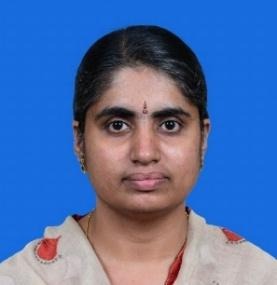
Dr. Seena V.
Academic Expert IIST Thiruvananthapuram |
Dr. Seena V. is a Professor at the Indian Institute of Space Science and Technology, Thiruvananthapuram. Her research focuses on MEMS/NEMS-based sensor systems, electromechanical transduction mechanisms, and semiconductor device technologies for sensing applications. Her work includes FET-based sensors with suspended gate architectures, MEMS energy harvesters, and sensor platforms based on silicon, polymers, and emerging materials.
|
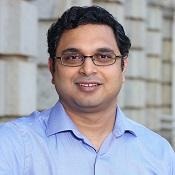
Dr. Saurabh Chandorkar
Academic Expert IISc Bengaluru |
Dr. Saurabh Chandorkar is an Associate Professor at the Centre for Nano Science and Engineering, Indian Institute of Science, Bengaluru. His research focuses on the modelling, fabrication, and characterization of MEMS/NEMS devices, with particular emphasis on high-Q resonators and energy loss mechanisms. His work also includes wafer-scale MEMS packaging, resonant accelerometer arrays, and capacitive micromachined ultrasonic transducer (CMUT) systems, as well as phase transition oscillators for neuromorphic applications.
|
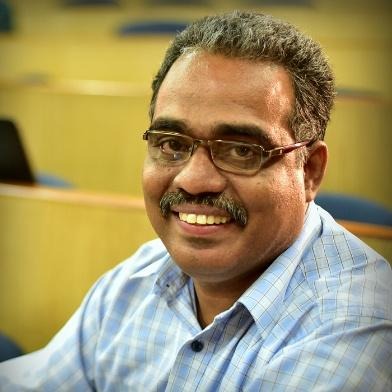
Dr. Roy Paily
Academic Expert IIT Guwahati |
Dr. Roy Paily is a Professor in the Department of Electronics and Electrical Engineering at the Indian Institute of Technology Guwahati, with affiliations to the Centre for Nanotechnology and the School of Health Science and Technology. His research focuses on devices, MEMS, and VLSI circuits and systems for ultra-low-power electronics and sensing applications. His work also explores RF energy harvesting and electronic systems for IoT and healthcare technologies.
|
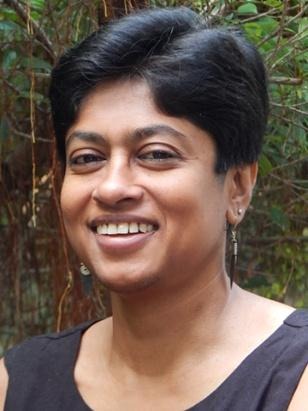
Dr. Shanti Bhattacharya
Academic Expert IIT Madras |
Dr. Shanti Bhattacharya is a professor and currently Head of the Department of Electrical Engineering at the Indian Institute of Technology Madras, where she leads the Applied Optics Group. Her research focuses on the design, development, and fabrication of metaoptics, diffractive optical elements, optical MEMS and optical imaging. She is particularly known for her work in beam shaping, and complex light generation.
|
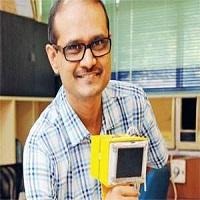
Dr. Nitin S. Kale
Industry Expert NanoSniff Technology |
Dr. Nitin S. Kale is the Co-Founder and Chief Technology Officer of NanoSniff Technologies, an IIT Bombay-incubated company developing MEMS-based sensing technologies. He received his PhD in Electrical Engineering from Indian Institute of Technology Bombay and previously worked as a Principal Engineer at Taiwan Semiconductor Manufacturing Company. Dr Kale lead Nanosniff into conceiving, designing, manufacturing, & commercialising the Nanosniffer ETD. It is the world's first Explosives Trace Detector based on a MEMS microsensor. The Nanosniffer ETD is operational at over 3 dozen airports in India. Dr Kale's work focuses on Microsensors & Instrumentation for critical-infrastructure security applications.
|
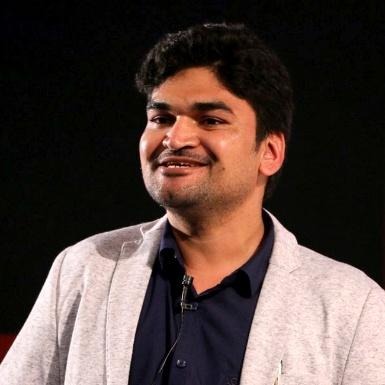
Dr. Vinay Kumar Chauhan
Industry Expert PathShodh Healthcare Pvt. Ltd |
Dr. Vinay Kumar Chauhan is the Co-founder and CEO of PathShodh Healthcare, an Indian Institute of Science-incubated startup developing affordable point-of-care diagnostic technologies. An alumnus of the Centre for Nano Science and Engineering (CeNSE), IISc, he works on biosensor technologies for rapid disease detection and was among the researchers who spearheaded the development of the strip-based handheld biosensing platform anuPath. With 30+ international patents and numerous publications, his work focuses on translating nanoscience innovations into accessible diagnostic solutions.
|
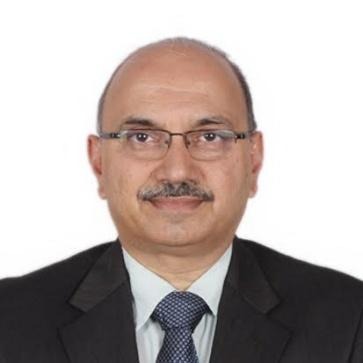
Dr. Sudhir Kamath
Expert From DRDO DIA-RCoE |
Dr. Sudhir Kamath is the Director of the DRDO Industry Academia Raman Centre of Excellence (DIA-RCoE) at IISc Bangalore, where he leads strategic research collaborations between defence laboratories and academia. He previously served as Director General of the Micro Electronic Devices and Computational & Cyber Systems (MED & CoS) cluster at DRDO. His work has contributed to the development of advanced sensors and microwave power modules for radar, electronic warfare, and communication systems. His current work at DIA-RCoE focuses on fostering long-term research in areas such as photonic chips, aerospace materials, and micro/nano systems for national security applications.
|

Ashwini Jambhalikar
Expert From ISRO LEOS-ISRO |
Ashwini Jambhalikar is a scientist at the Laboratory for Electro-Optics Systems (LEOS) of the Indian Space Research Organisation in Bengaluru. She is working in the area of MEMS (Micro electro mechanical systems) and MOEMS (Micro opto-electro mechanical systems). Her work focuses on the design, fabrication, and reliability analysis of micromachined devices for space applications. She has contributed to research on inertial sensors, microfluidic devices like MEMS valves and micro heat pipes, MEMS based quadrupole mass filters, MOEMS tunable Fabry Perot interferometer filters, MEMS based chip scale vapor cells and MEMS-based instrumentation platforms. She was part of the research team that designed, fabricated and realised the Instrument for Lunar Seismic Activity (ILSA) for Lunar Seismic Activity experiment aboard the Chandrayaan-3 mission.
|