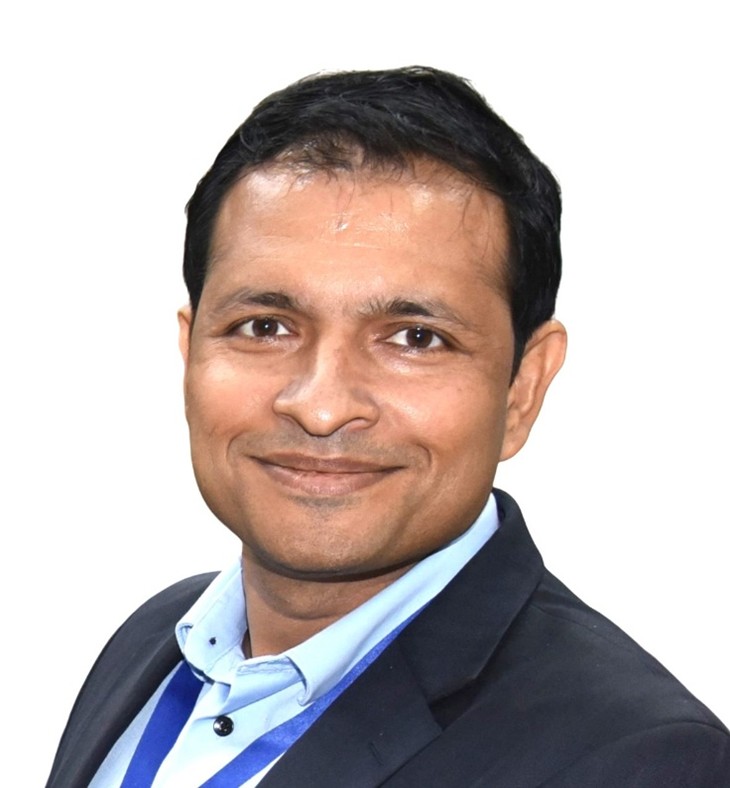
Dr. Shree Prakash Tiwari
Academic Expert IIT Jodhpur |
Dr. Shree Prakash Tiwari is a renowned leader in emerging memory technologies. His research particularly focuses on developing systems for flexible and large-area electronics. He works on a variety of technologies, including devices such as organic and synaptic field-effect/thin-film transistors (FETs/TFTs), resistive random access memory (RRAM), nanogenerators, and physiological sensors for human-machine interaction and with the goal of pushing circuit and system boundaries. His research Group, FLAME, is also committed to conducting environmentally conscious research by exploring novel manufacturing processes and promoting the development of eco-friendly electronic systems that integrate cutting-edge technology and sustainability.
|
Dr. Souvik Mahapatra
Academic Expert IIT Bombay |
Dr. Souvik Mahapatra is with the department of Electrical Engineering at IIT Bombay. His research interest is reliability of CMOS logic device and circuit and Flash memory. He works closely with several semiconductor industries in the fab/foundry, fabless, IDM, fab tool and EDA space. He is a fellow of IEEE, INSA, INAE and IASc.
|
Dr. Sandip Mondal
Academic Expert IIT Bombay |
Dr. Sandip is a distinguished professor renowned for his extensive research on the physics and technology of semiconductor devices, with interests spanning neuromorphic engineering for artificial intelligence, Flash memory technologies (floating gate, SONOS, and charge-trapping devices), and flexible electronics using cost-effective, solution-processed semiconductors and dielectrics. He also works on high-k gate dielectrics, deep-level and interface trap characterisation, and the development of an ultra-high-speed capacitance–voltage (uHSCV) measurement system for advanced electronic transport studies. His research further explores emerging CMOS devices, as well as quantum dot (QD) and nanoparticle (NP) devices. Through this multidisciplinary approach, Prof. Sandip aims to advance device innovation across memory, AI hardware, and quantum computing domains
|
Dr. Rik Dey
Academic Expert IIT Kanpur |
Dr. Rik Dey works on the electrical and magnetic properties of strongly spin–orbit–coupled (SOC) materials, including transition-metal chalcogenides (TMCs), transition-metal dichalcogenides (TMDCs), and topological insulators (TIs). His research focuses on coupled charge–spin transport in these materials and on current-induced magnetization switching in nanomagnets, with the goal of advancing next-generation spin-orbitronics technologies beyond spin-transfer-torque (STT)-based magnetoresistive random-access memory (MRAM). He also develops physics-based models for electrostatics and charge transport in advanced transistor architectures such as nanosheet and forksheet field-effect transistors (FETs). Additionally, he is involved in the growth and fabrication of two-dimensional TMDC-based devices using chemical vapor deposition (CVD) for MRAM and FET applications.
|
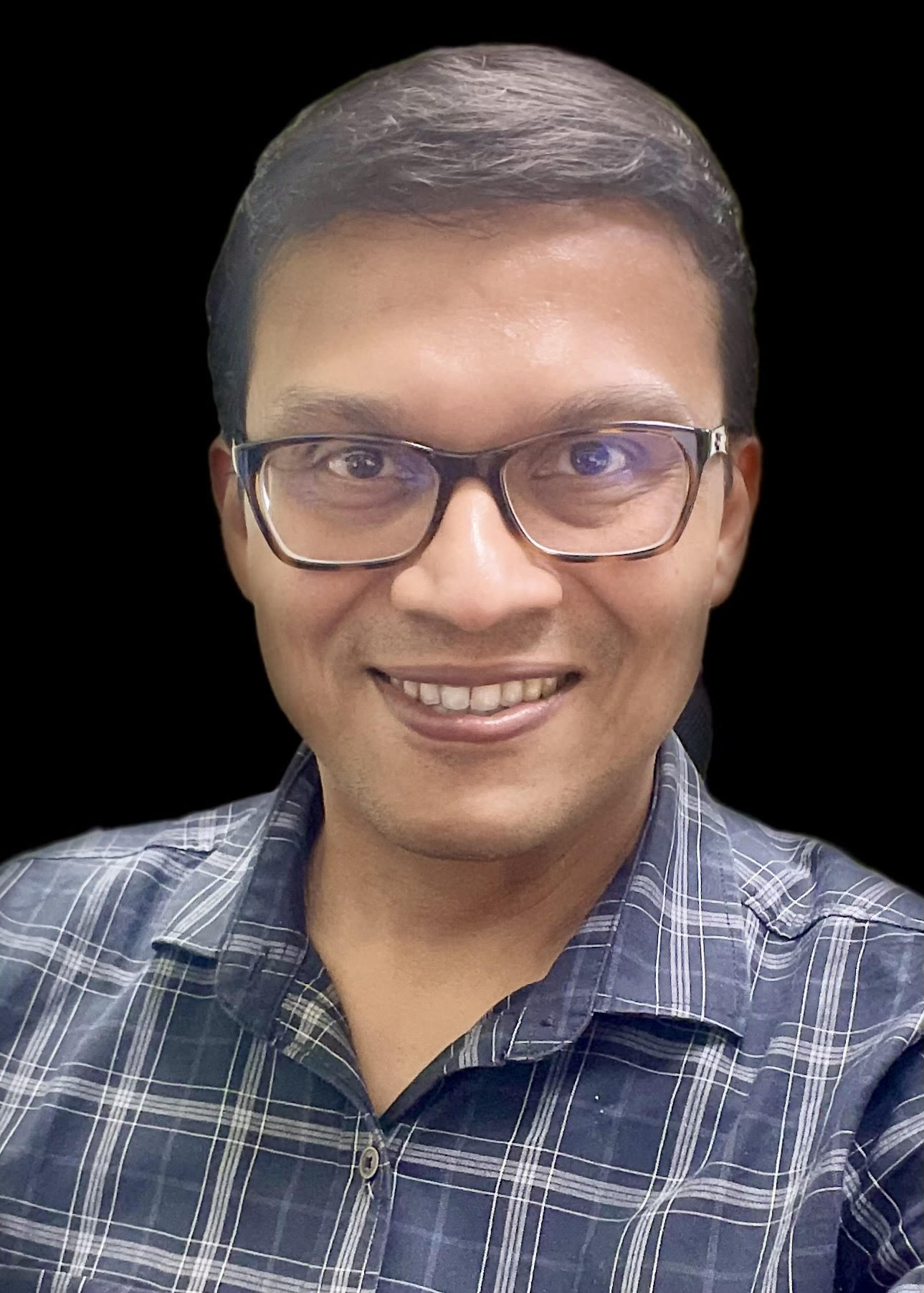
Dr. Ayan Roy Chaudhuri
Academic Expert IIT Kharagpur |
Dr. Ayan Roy Chaudhuri is a leading researcher in semiconducting and functional materials for nanoelectronic, optoelectronic, and energy applications. His research work involves substrate engineering for 2D semiconductors, integration of complex oxides with mainstream semiconductor platforms, and strain and defect engineering in oxide and semiconductor heterostructures to tailor material properties for enhanced device performance. Along with developing advanced materials for memory, neuromorphic computing, and sensing applications, he explores the fundamental mechanisms of thin-film formation and epitaxy. By integrating advanced material innovation with cutting-edge device engineering, Prof. Ayan aims to enable impactful advancements at the intersection of electronics, energy, and sensing technologies.
|
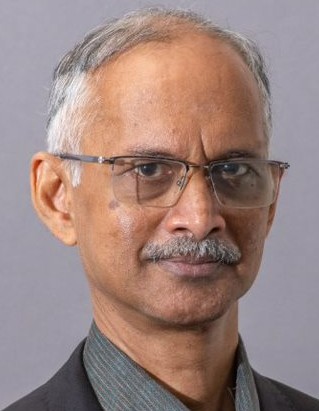
Dr. Vipin Madangarli
Academic Expert IIT Bombay |
Dr. Vipin Madangarli is a former Director & India Site Lead at GlobalFoundries. Dr. Vipin Madangarli brings extensive industrial and leadership experience. He led advanced semiconductor process development and manufacturing initiatives. His expertise spans CMOS technology development, device engineering, yield improvement, and process integration for cutting-edge technology nodes. With a strong background in semiconductor fabrication and innovation-driven engineering, Dr. Madangarli focuses on bridging the gap between academia and industry to foster ecosystem development for India's growing semiconductor industry.
|
Dr. Shyam Sunder Raghunathan
Industry Expert Head of MIRC |
Dr. Shyam Sunder Raghunathan is a senior technical contributor as Head of Micron India Research Center (MIRC) and Distinguished Member of Technical Staff (DMTS) at Micron Technology, Inc. He specializes in non‑volatile memory technology development, device engineering and reliability. His work spans cutting‑edge 3D‑NAND array designs and advanced block management techniques. He is an inventor or co‑inventor of numerous patents assigned to Micron. His contributions to memory device design and reliability modelling mark him as a thought‑leader in the semiconductor memory domain.
|
Dr. Devesh Dwivedi
Industry Expert GlobalFoundries |
Dr. Devesh Dwivedi is an industry veteran in semiconductor memory and VLSI design. Currently, he is associated with GlobalFoundries (India) as Director, eNVM Product Development & India Site Head, Design Engineering CoE at GlobalFoundries. His expertise spans a broad range of semiconductor technologies, including memory design, analog and mixed-signal circuits, and high-speed serial links. His work additionally encompasses fundamental architecture development, test chip fabrication, and custom layout design, facilitating the transformation of innovative conceptions into functional and high-performance electronic systems. |